I’m a mathematician and statistician, by training, who works in artificial intelligence and machine learning. What draws me in is a question that has followed me through every field I’ve worked in: how do you take complex, messy, high-stakes data and organize it into knowledge that people can understand, trust, and act on? I’ve chased that question across medical imaging, clinical informatics, biomedical research, and education — building models that deepen understanding, strengthen trust, and make complex processes more visible rather than more opaque.
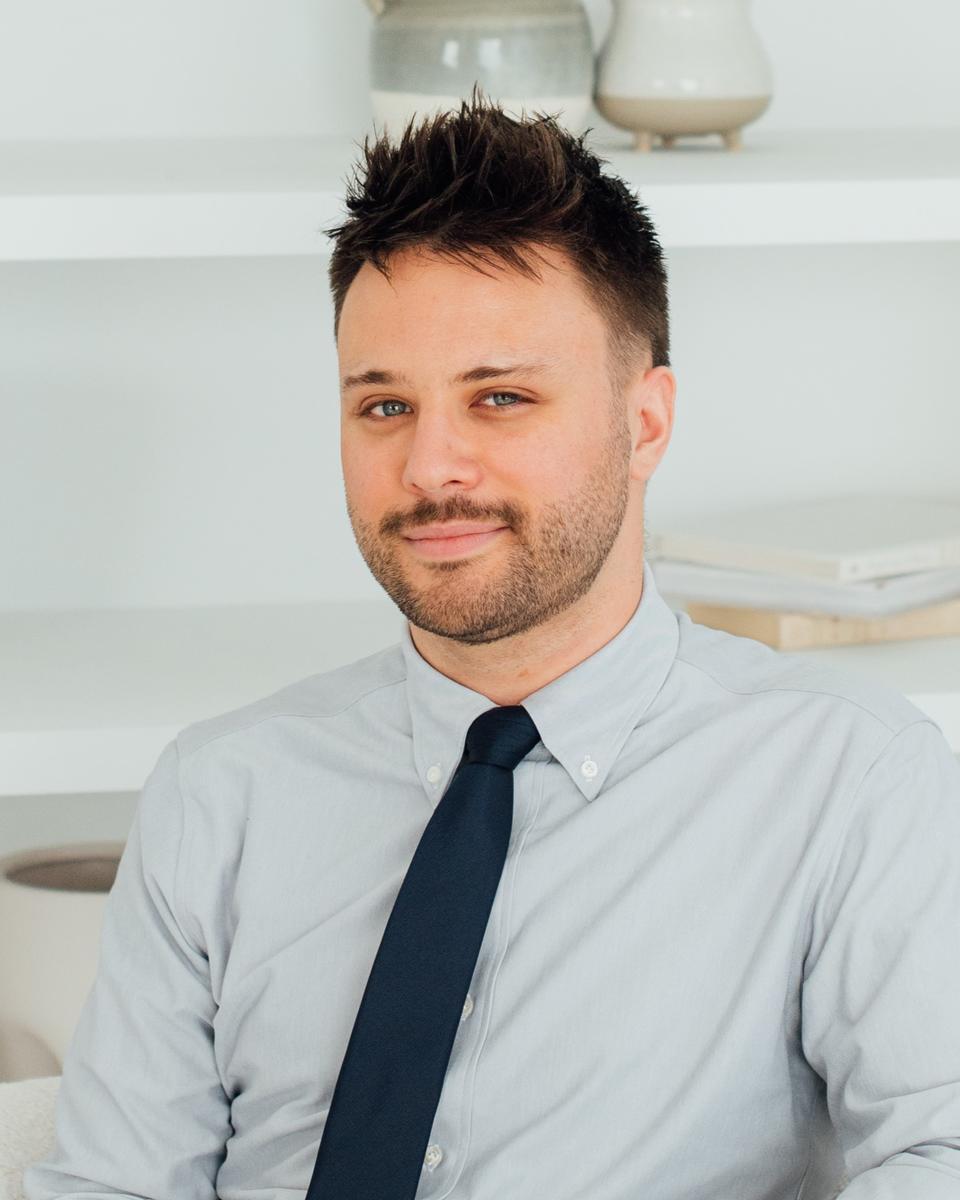
My academic path has moved through several disciplines that continue to shape how I think about knowledge, rigor, and impact. I began in radiation therapy, where precision, accountability, and patient trust are non-negotiable. That foundation expanded through training in physics, mathematics, and statistics — including a master's in applied mathematics and statistics — where I developed a respect for both the power and the fragility of models built on complex data. These experiences led to a Ph.D. in Medical Biophysics at the University of Toronto, where my thesis, AI-Quantified Tissue Factors in Breast MRI and the Risk of Breast Cancer, developed AI methods for breast-cancer risk. Working with breast MRI at Sunnybrook and, later, natural-language processing over radiology reports at the University Health Network, I built methods that combine medical imaging and clinical text to model patient risk — and learned firsthand that meaningful models depend not just on performance, but on interpretability, robustness, and fit to the real setting.
Since then, my work has centered on the algorithms that make data legible: deep learning for medical imaging, transformer-based natural-language processing for clinical text, and retrieval- and memory-based methods for organizing knowledge. I think of these as tools for one goal — structuring information so it can be understood and used — and I’ve applied them across medical imaging, clinical informatics, biomedical research, and, most recently, graduate and medical education.
Today I am a Lecturer in Biomedical Informatics and a Curriculum and Research Fellow in the Department of Biomedical Informatics at Harvard Medical School, where I build and study AI systems in two research homes: the Core of Computational Biomedicine, where I develop educational-AI tools grounded in learning science, and the Zitnik Lab, where I work on neuroscience-inspired continual learning for adaptive exercise recommendation. Across both, I care about how knowledge is represented, retained, and organized over time, and about designing models that support — rather than replace — expert human judgment.
Much of what I build is infrastructure for making knowledge usable: rubric-aligned systems for evaluating open-ended answers, retrieval-grounded assistants that ground their responses in source material with careful citation, domain-graph and curriculum-mapping methods that turn a body of material into navigable structure, and adaptive recommendation that responds to a learner’s evolving needs. Whether the data represent patients or students, I emphasize transparency, honest evaluation, and trustworthiness over novelty alone.
What ties this together is a commitment to shared curiosity and iterative improvement. The best models — like the best learning — are collaborative, adaptive, and accountable to the people they serve. I see my role as building bridges between the technical and the human: between how machines represent knowledge and how people create meaning, learn, and make decisions in complex, real-world settings.
Education
- Ph.D., Medical Biophysics — University of Toronto (2017–2023)
- M.A., Applied Mathematics & Statistics — York University (2016–2017)
- B.Sc., Physics (Minor in Math & Stats) — University of New Brunswick (2013–2016)
- B.H.Sc., Radiation Therapy — University of New Brunswick (2009–2013)